For Those Who Still Call Vietnam Home: Music, Memory, and Belonging Across Distance
Table of Contents
- 1. The feeling of calling Vietnam home from afar
- 2. Home carried in memory, language, and the senses
- 3. Vietnamese music as a living bridge to the homeland
- 4. Keeping cultural ties without turning heritage into performance
- 5. When the cello gives homesickness another language
- 6. A community story through Cello Fundamento
- 7. For those who still call Vietnam home: making space for conversation
- 8. Conclusion: Let home remain a living conversation
The feeling of calling Vietnam home from afar
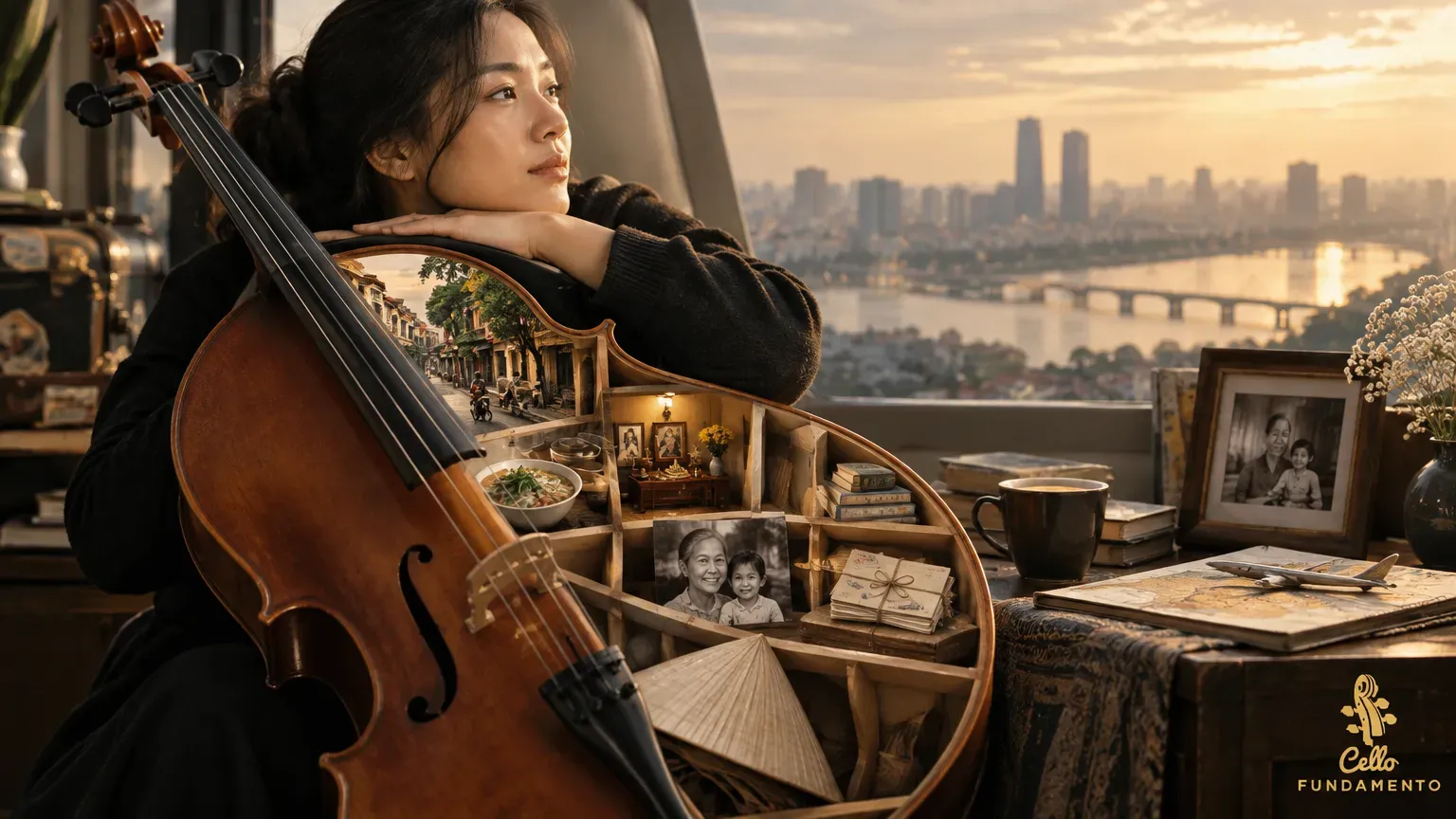
Distance does not settle the question of home. For people who left Vietnam decades ago, for those who arrived elsewhere as children, and for Vietnamese Americans raised among several languages and customs, “home” can remain both precise and unfinished. It may be a city street remembered at dawn, a grandmother’s way of preparing a meal, a family altar, a familiar phrase, or a place known largely through stories.
Homesickness is not always a wish to return permanently. Sometimes it is a sudden awareness that a part of one’s emotional map was formed elsewhere. A news report, a photograph of Hanoi in the rain, or a song heard in an unexpected place can make that map feel close again.
For those who still call Vietnam home, belonging does not need to be proved by frequency of travel, fluency in Vietnamese, or a single political or personal narrative. Migration histories differ. So do family circumstances, memories, losses, and hopes. Yet cultural memory can remain active across oceans: not fixed in the past, but continually reshaped by the life being lived now.
Home carried in memory, language, and the senses
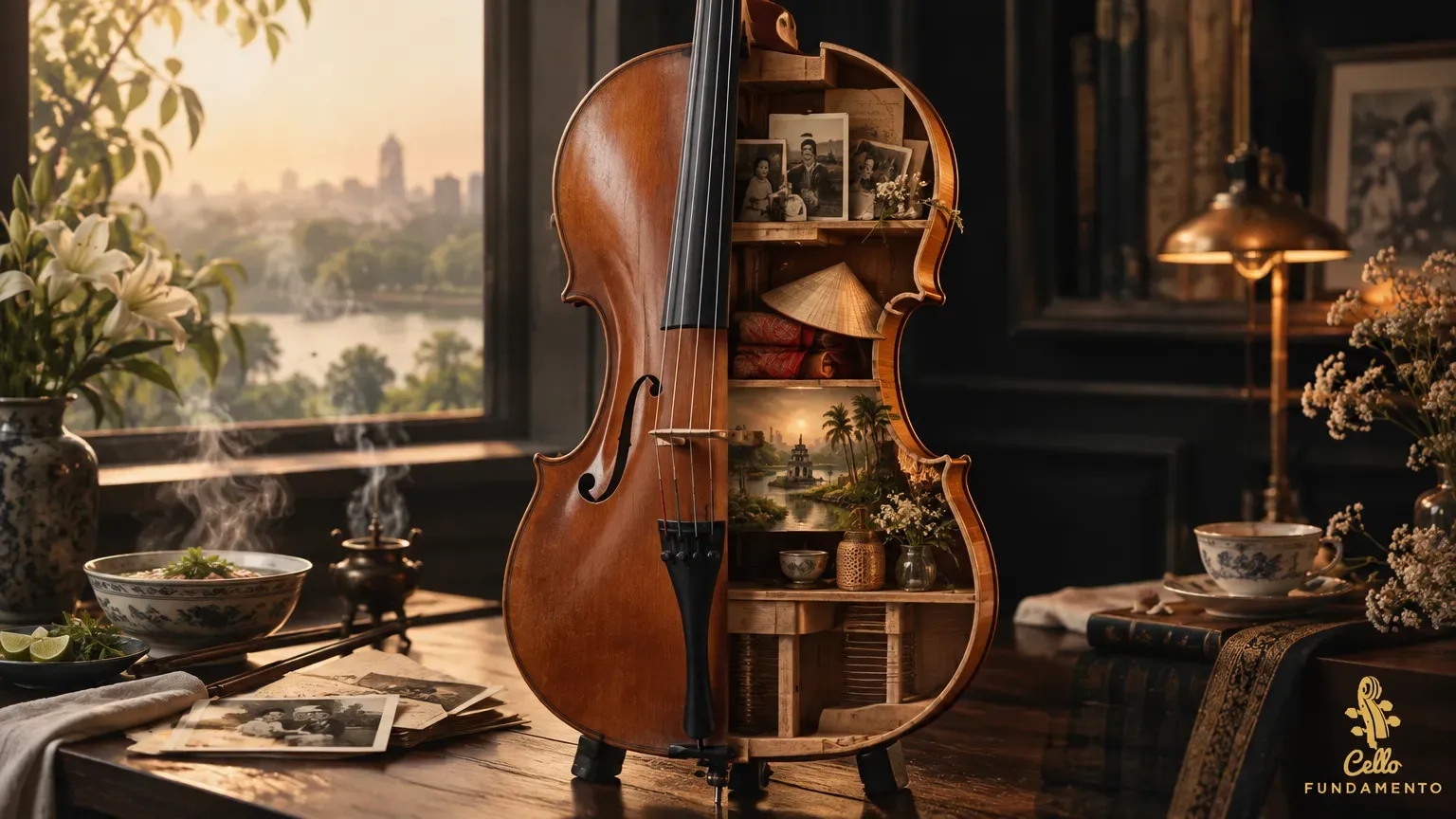
Home often survives in details too ordinary to explain. The steam from a bowl of phở, the sound of rain on a metal roof, the scent of incense, the rhythm of a market conversation, or the particular softness of a Vietnamese endearment may carry more emotional weight than a formal history lesson.
Language can hold this intimacy, even when it is partial. Some people speak Vietnamese every day; others understand more than they can answer. Some know only family names, greetings, recipes, and song lyrics. None of these relationships to language are insignificant. Words can preserve humor, respect, grief, affection, and ways of addressing one another that do not translate neatly.
Memory also changes with time. A childhood image may become brighter, more complicated, or less certain. That does not make it false. It shows that homeland is not merely a location on a map. It is a living collection of sensations, relationships, and meanings carried into new homes.
What family stories preserve—and what they leave unsaid
Family stories are often the first archive of Vietnam for relatives living overseas. They may preserve names of neighborhoods, school days, courtship, work, wartime separation, migration routes, or a village that younger family members have never seen. They can make history feel intimate rather than distant.
But every archive has silences. A parent may avoid speaking about hardship. An elder may remember joy more readily than fear, or the reverse. Some stories are repeated at gatherings; others emerge only in fragments, after many years, or not at all. Silence should not automatically be treated as secrecy or failure. It may be protection, fatigue, privacy, or a feeling that certain experiences cannot be adequately explained.
Listening with patience matters more than demanding a complete account. A thoughtful question, a saved voice recording made with consent, or time spent looking through old photographs can honor family history without turning it into an obligation. What is passed down may be both story and absence.
Growing up between cultures without reducing identity
Growing up between cultures can bring creativity, humor, and perspective, but it can also bring pressure. A Vietnamese American may be asked to represent an entire culture at school, at work, or in social settings while also being judged at home for not knowing enough. These expectations can flatten a complicated life into a test of authenticity.
Identity is rarely a choice between being “Vietnamese enough” and “American enough.” It can include several loyalties at once: attachment to family traditions, ease in English, affection for a local community abroad, curiosity about Vietnam, or uncertainty about where one belongs. These are not contradictions that need immediate resolution.
Different generations may also use different language for the same feeling. One person may speak of roots; another may speak of inheritance, responsibility, freedom, or simply family. A fuller understanding begins when cultural identity is allowed to be specific and evolving, rather than performed for approval. Belonging can be quiet, ordinary, and entirely real.
Vietnamese music as a living bridge to the homeland
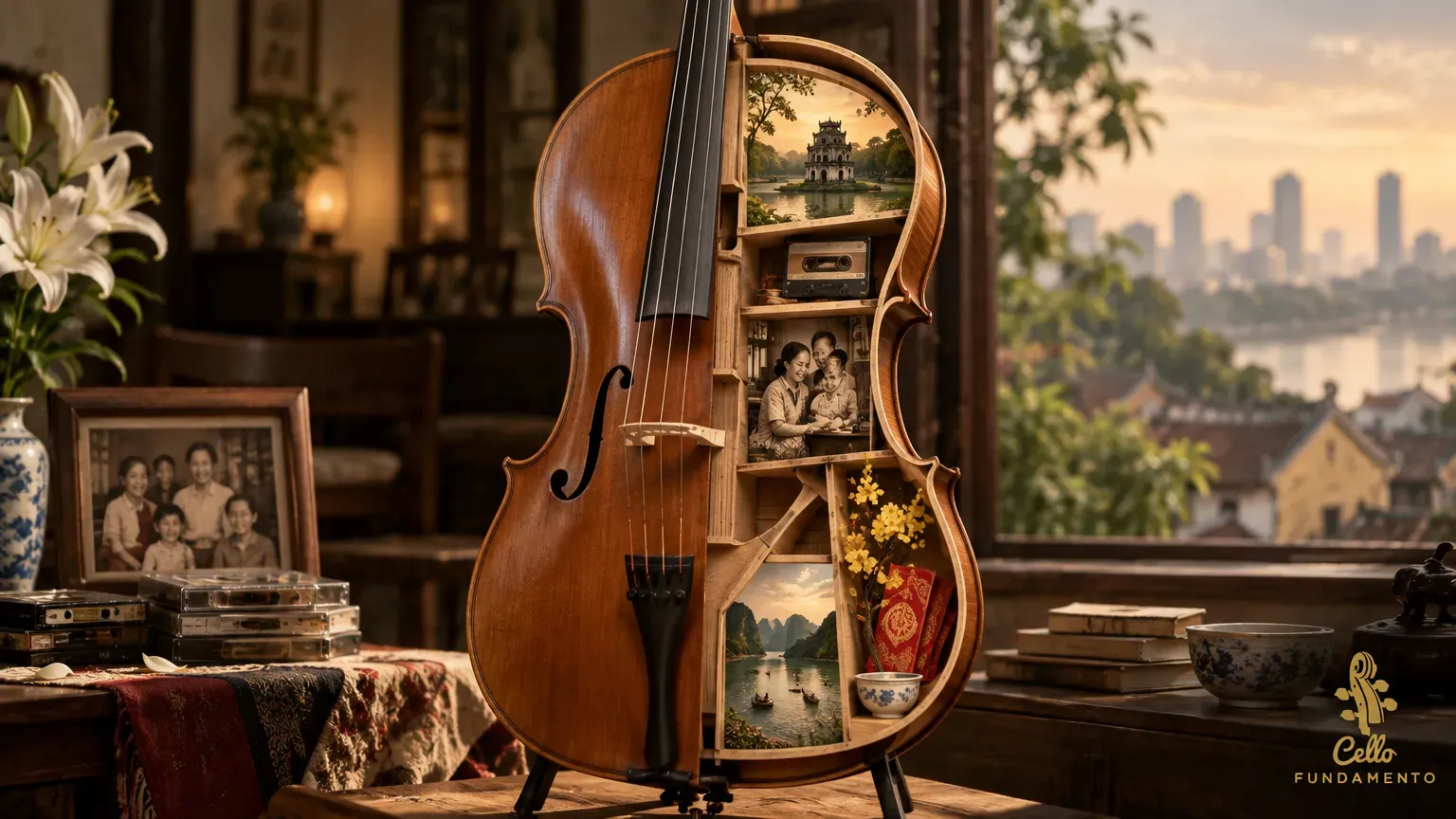
Vietnamese music can reconnect listeners with places and people that are no longer physically near. A melody may recall a parent singing while cooking, an old cassette played during a long drive, a television program watched with grandparents, or a song heard during Tết. The music does not have to carry the same meaning for everyone to create a shared point of return.
Its power lies partly in recognition. A familiar melodic turn, a distinctive vocal color, or the sound of a traditional instrument can make memory feel present rather than historical. Even listeners who do not understand every lyric may recognize the emotional atmosphere surrounding a song: tenderness, longing, celebration, devotion, or the ache of distance.
For the Vietnamese diaspora, music can also create room for conversation. It may introduce younger relatives to songs their parents love, allow elders to share context, or give family members a way to sit together without needing to explain everything. Listening becomes a form of cultural preservation when it invites curiosity rather than demands agreement.
New arrangements matter, too. When Vietnamese songs are interpreted through cello, piano, violin, or orchestra, they are not required to abandon their origins. They can travel into another musical space while still carrying the contours of home.
Why a familiar melody can hold more than nostalgia
Nostalgia is often part of listening, but it is not the whole experience. A familiar Vietnamese melody may bring comfort, yet it can also raise questions about family history, migration, aging, or the distance between remembered Vietnam and present-day Vietnam. Music can hold these mixed emotions without forcing them into a single conclusion.
A song associated with a particular generation may become a bridge rather than a boundary. An elder may hear a reminder of youth; an adult child may hear the soundscape of home; a younger listener may discover a repertoire that was never fully explained. Each response is shaped by personal context.
Instrumental versions can be especially open. Without lyrics directing the listener toward one interpretation, the melody can leave space for private associations. A cello rendition may emphasize a line’s warmth, weight, or fragility in a different way from a vocal performance. The result is not a replacement for the original, but another path into its emotional landscape.
Listening across generations and distances
Shared listening does not require everyone to like the same music in the same way. A family playlist can hold older songs, contemporary Vietnamese artists, instrumental pieces, and recordings discovered by younger relatives. What matters is the exchange around them: who introduced the song, where it was heard, and what it means now.
Distance can make these exchanges more intentional. A song sent in a message may become a small gesture of care. A video call can include a request for an aunt or uncle to explain a composer, lyric, or memory. During holidays, music can accompany a meal and make room for stories that do not arise in ordinary conversation.
There is also value in listening alone. For some people, Vietnamese music offers a private place to feel grief, gratitude, confusion, or longing without needing to translate those feelings. Cultural connection is not always public. It can be an inward practice, carried through headphones on a commute or through a melody quietly replayed at the end of the day.
Keeping cultural ties without turning heritage into performance
Heritage can be meaningful without becoming a display. There is no single correct way to remain connected to Vietnam while living abroad. Some people cook family dishes every week; others attend cultural events, study Vietnamese, travel when possible, support artists, or simply keep certain songs close. Connection may be visible, but it can also be deeply private.
The pressure to perform identity can make cultural practice feel heavy. A person may feel expected to speak perfectly, know every custom, or explain Vietnam to people who have never tried to understand its complexity. These expectations overlook the realities of migration, interrupted language learning, adoption, mixed families, displacement, and generational change.
A more generous approach begins with permission: permission to learn slowly, to ask relatives respectful questions, to return to traditions after years away, or to hold an ambivalent relationship with the past. Cultural preservation is strongest when it grows from care rather than guilt.
It also benefits from attention to living culture. Vietnam is not frozen in the era a family left. Engaging with contemporary Vietnamese music, literature, art, and communities can widen understanding beyond inherited memory while still honoring the people who carried that memory forward.
Everyday practices that make belonging tangible
Small, repeatable practices can make cultural connection feel less abstract. They need not be grand gestures, and they should fit the realities of each household. The goal is not to complete a checklist, but to create opportunities for attention, exchange, and enjoyment.
- Listen to Vietnamese music together and ask what a song reminds each person of.
- Record family stories only with permission, including names of places, recipes, and memories worth preserving.
- Cook a dish with an elder or relative and write down the method in their own words.
- Read or watch Vietnamese cultural work from different generations and regions.
- Attend community concerts, festivals, or educational events that welcome questions and participation.
- Make space for younger relatives to bring their own interests into the conversation.
Belonging becomes tangible when it is practiced with warmth, not surveillance. A shared song or meal can become a more lasting connection than a lecture about what someone should know.
Making room for changing relationships with Vietnam
A relationship with Vietnam may deepen, fade, return, or change shape over a lifetime. A first visit after many years can feel overwhelming. A return trip may bring recognition and estrangement at once. Someone who once resisted family traditions may later seek them out; someone else may remain more connected to people than to place. These responses are all possible.
It is important not to romanticize distance. Homesickness can coexist with painful memories, political differences, family conflict, or the practical reality that return is not simple. Love for a homeland does not require silence about what has been difficult.
Making room for complexity allows people to be honest. Instead of asking whether someone is sufficiently connected, it may be more helpful to ask what connection means to them now. The answer may involve language, music, food, friendships, faith, travel, activism, or none of these in an obvious form. Cultural identity is not a completed inheritance; it is a relationship continually negotiated with time.
When the cello gives homesickness another language
The cello is often described through its range and resonance, but its emotional appeal can be understood without technical vocabulary. Its sound can move from a low, grounded register to a singing upper line, allowing one instrument to suggest both steadiness and vulnerability. In a reflective setting, that range can feel especially suited to melodies associated with longing or return.
When a Vietnamese song is arranged for cello, the instrument does not speak words, yet it can draw attention to the shape of a melody. A listener may notice a phrase that resembles a sigh, a pause that feels like waiting, or a rising line that carries hope. These associations are personal rather than universal, which is part of their value.
Cello music should not be treated as a cure for homesickness. It cannot resolve the practical and emotional complexities of migration. But it can offer a form in which feeling has room to unfold. For listeners who struggle to explain what Vietnam means to them, an instrumental performance may provide another kind of language: attentive, spacious, and free from the demand to make every memory clear.
The cello’s warmth and the space around a note
A cello can make a melody feel close because of its sustained tone and its capacity for detail. The bow can draw out a phrase gradually, allowing the listener to hear its contours rather than moving quickly past them. In a quiet passage, the silence around a note becomes part of the experience.
That space matters for music connected to cultural memory. A song heard in childhood may return not as a complete scene, but as an atmosphere: a room, a face, a season, a voice no longer present. Instrumental music leaves room for those associations without claiming to define them.
The cello also works naturally in conversation with other instruments. Piano may provide clarity and motion; violin may lift a line into brightness; an orchestra can expand the scale of a familiar melody. These combinations show that intimacy and grandeur do not have to compete. A Vietnamese melody can remain personal while being heard in a broader, contemporary classical setting.
From Vietnamese songs to a shared concert experience
In concert, listening becomes communal. People arrive with different biographies, but a recognizable melody can create a brief shared field of attention. One listener may remember Hanoi, another may think of a parent abroad, and another may simply encounter Vietnamese music in a new form. No single response is required.
Cello Fundamento has presented Vietnamese songs in classical arrangements alongside cello-centered performances with piano, violin, and orchestra. This approach can place Vietnamese repertoire in dialogue with an international concert tradition without treating either as decorative. The arrangement becomes an act of listening to the original material and considering what new colors can reveal.
For overseas audiences, a concert can also become a gathering point: a place where Vietnamese cultural memory is neither confined to the home nor simplified for outsiders. It can be shared with care, heard in full musical texture, and carried away as a personal memory of its own.
A community story through Cello Fundamento
Cello Fundamento offers one documented example of how classical music, Vietnamese repertoire, and community access can meet. Founded by cellist Đinh Hoài Xuân as a concert series in 2016, it has continued as an annual artistic platform centered on bringing cello and orchestral music closer to wider audiences in Vietnam.
Its work is not limited to solo performance. Cello Fundamento presents cello in combination with instruments such as piano and violin, as well as with orchestras. It also develops classical-style arrangements of Vietnamese songs, creating a setting where familiar melodies can be heard through new instrumental colors.
In September 2023, Cello Fundamento became a social enterprise in Hanoi. Its stated mission is to make classical music more accessible to the community, especially younger generations, through performance, education, and related cultural initiatives. That mission matters because access is not only about ticketed concert halls. It includes the first moment a child sees a cello up close, hears an orchestra, or realizes that classical music can belong in their own cultural world.
For diaspora readers, this work is a reminder that cultural connection can be sustained through institutions as well as families. Music can travel, change context, and still remain rooted in care for community.
The mission behind bringing cello closer to people
Cello Fundamento’s educational initiative, One Million Hands Touch Cello, brings cello and classical music into schools through performances and music education activities. The project is designed to introduce younger audiences to an instrument that may otherwise seem distant from everyday life.
The initiative reflects a practical understanding of access: people are more likely to feel welcome in classical music when they can encounter it directly. Seeing an instrument, hearing it live, and meeting performers can make the experience more immediate than a description alone.
The organization also identifies support for young people interested in classical music through the Cello Fundamento Scholarship as part of its broader work. Together, concert programming, school activities, and scholarship support point toward a cultural model that values both artistic presentation and opportunities for future participation.
This is not a claim that one organization can speak for every community. Rather, it is a concrete example of how a music-centered social enterprise can connect performance with education and cultural continuity.
Cultural memory in an international concert setting
Vietnamese music can enter an international concert setting without losing its local character. The key is thoughtful programming and arrangement: allowing the original melodic identity to remain audible while inviting new textures from cello, orchestra, or other instruments.
Cello Fundamento’s concert work has included collaborations with Vietnamese and international artists, and its programming has emphasized the meeting of cello with other musical voices. In this setting, Vietnamese songs are not presented as a novelty beside classical repertoire. They can be treated as material worthy of detailed listening, interpretation, and orchestral imagination.
That approach can be meaningful for audiences living overseas. A familiar song heard in a formal concert space may challenge the assumption that cultural memory belongs only to private family life. It can be public, artful, and open to listeners from many backgrounds.
International exchange also carries responsibility. Cultural music should not be reduced to a symbol of national identity or nostalgia. Its meanings are layered, shaped by composers, performers, communities, languages, and the changing lives of listeners. A careful concert can make room for that complexity.
For those who still call Vietnam home: making space for conversation
Conversation is one way to keep cultural memory alive. It can begin with a simple prompt: What song reminds you of home? Which place do you still picture clearly? What Vietnamese word do you miss hearing? What did your family carry with them, and what did they leave behind?
These questions do not require a polished answer. They are invitations to listen across generations and experiences. A person who left Vietnam as an adult may answer differently from someone born overseas. A relative who rarely speaks about the past may prefer to share a song instead of a story. Another may not feel ready to engage at all. Respecting those differences is part of meaningful community.
Music can make this exchange gentler. It gives people something to gather around when direct conversation feels difficult. A cello arrangement of a Vietnamese melody, a family recording, or a song played during a meal can open a door without forcing anyone through it.
For those who still call Vietnam home, the phrase itself may mean a birthplace, an ancestry, a language, a longing, or a promise to remain curious. Let it remain spacious enough to hold all of these meanings. Connection grows not through perfect answers, but through attention to what people are willing to share.
Conclusion: Let home remain a living conversation
Home is not always where one currently lives, and it is not always where one can easily return. For many Vietnamese people living overseas, it exists in relationships between past and present: in language remembered imperfectly, family stories carefully held, meals prepared with love, and music that makes distance feel briefly smaller.
Vietnamese music offers more than nostalgia because it can carry continuity, question, and possibility at the same time. Heard through the cello, a familiar melody may become newly spacious—personal enough for private memory, yet open enough to share with others.
Cello Fundamento’s work shows one way music can support this living connection: through concerts, Vietnamese repertoire in new arrangements, and educational initiatives that bring classical music closer to younger audiences. Its example does not define belonging, but it affirms that culture can be sustained through attentive listening and community participation.
Let home remain a living conversation: one that welcomes memory, acknowledges change, and leaves room for every generation to hear Vietnam in its own way.