Can You Inherit a Homeland Through Music? Identity, Memory, and Musical Legacy
Table of Contents
- 1. Can a Song Become a Homeland? Defining Cultural and Legal Inheritance
- 2. What It Means to Inherit Music Instead of Land
- 3. How Vietnamese-American Families Carry Identity Through Sound
- 4. Music as a Cultural Artifact: Memory, Place, and Belonging
- 5. When Musical Heritage Feels Lost or Incomplete
- 6. How to Research Family History Through Music
- 7. How to Preserve a Family Musical Archive
- 8. What Cello Fundamento Shows About Preserving Vietnamese Musical Memory
- 9. Family Listening Rituals That Turn Inheritance Into Connection
- 10. If You Inherit Music Rights, Royalties, or Recordings
- 11. Questions About Musical, Cultural, and Legal Inheritance
- 12. A Homeland You Can Hear, Remember, and Pass Forward
Can a Song Become a Homeland? Defining Cultural and Legal Inheritance
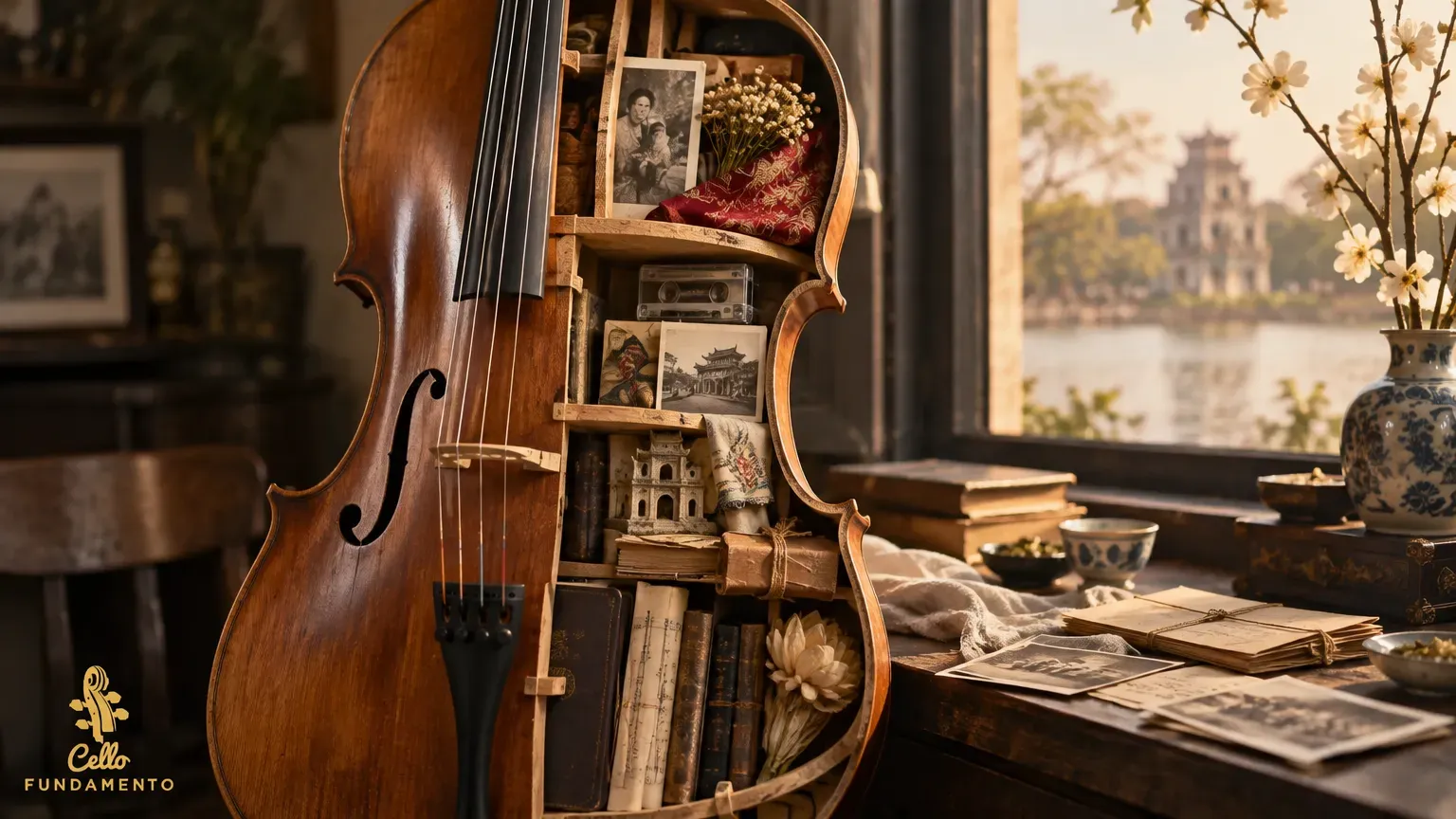
Can you inherit a homeland through music? Not in the legal sense of inheriting a house, land title, or passport. Yet a song can carry forms of inheritance that are no less real in daily life: a parent’s pronunciation of a lyric, a melody played during Tết, a voice heard from an old cassette, or a tune associated with Hanoi, Huế, or a relative who is no longer alive.
Cultural inheritance is the knowledge, feeling, practice, and memory passed between people. It may travel through language, food, stories, photographs, faith, and music. It does not require perfect fluency, a particular birthplace, or a single approved version of Vietnamese identity. A person can recognize an inherited connection in sound while still feeling uncertain about where they belong.
Legal inheritance is different. A composition, a sound recording, an instrument, a royalty account, or a publishing interest may be property in an estate. Those assets can pass to heirs and beneficiaries through a will, trust, probate process, contract, or applicable inheritance law. Their value and ownership depend on documents and jurisdiction, not on emotional attachment alone.
The two forms can overlap. A family recording may be both a treasured memory and a copyrighted asset. But they should not be confused. Music can offer a homeland of attention and remembrance; it cannot settle legal ownership, repair every family rupture, or define anyone’s identity for them.
What It Means to Inherit Music Instead of Land
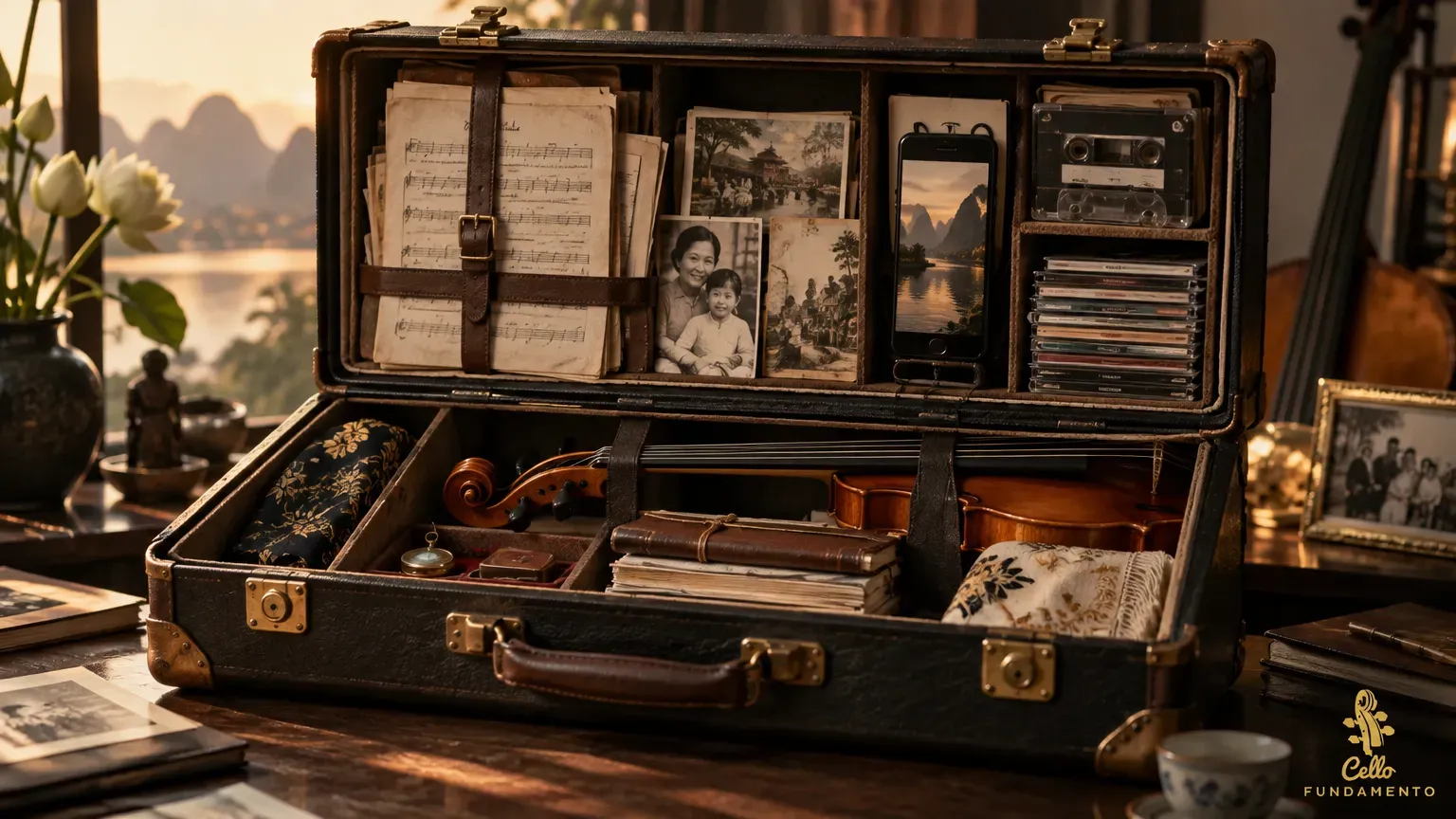
To inherit music instead of land is to receive something portable, repeatable, and unfinished. A song can cross oceans in a phone speaker, survive after a house has been sold, and return in a different arrangement decades later. For people raised far from a family’s original region, this portability can make music a powerful part of diaspora identity.
What is inherited may be formal or informal. Formal inheritance includes sheet music, recordings, instruments, concert programs, copyright interests, and royalty statements. Informal inheritance includes a grandmother’s lullaby, a parent’s karaoke favorites, the sound of cải lương playing in a family kitchen, or a remembered phrase from a song whose title no one can now recall.
Neither category is automatically complete. A child may inherit recordings without knowing the stories behind them. Another person may know every chorus but not speak Vietnamese comfortably. Musical inheritance is therefore less like receiving a finished object and more like receiving an invitation: listen closely, ask questions, preserve what can be preserved, and decide what you want to carry forward.
It is also important not to treat heritage as biological destiny. Musical taste, cultural knowledge, and belonging are learned through relationships and repeated encounters. Someone may feel deeply connected to Vietnamese music without having inherited it through blood, while a descendant may feel distant from sounds their relatives treasure. Both experiences deserve room.
How Vietnamese-American Families Carry Identity Through Sound
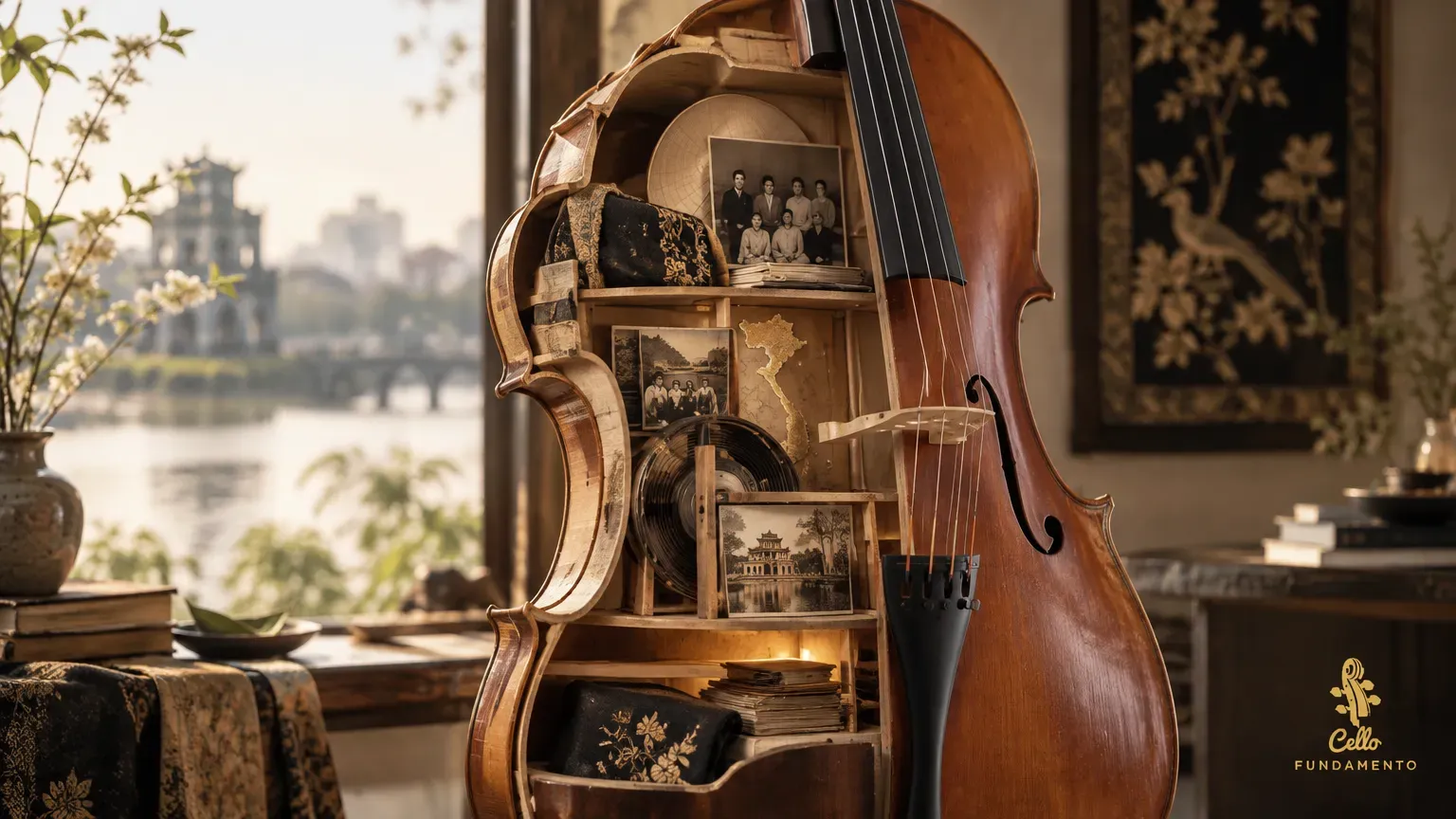
Vietnamese-American families can carry identity through sound in quiet, ordinary ways. Music may be present in a weekend drive, a video call with relatives, a wedding playlist, a community performance, or the songs played while cooking. Sometimes the most enduring inheritance is not a full musical education but a sensory memory: a particular vocal ornament, the pulse of a drum, or the way an elder becomes silent when a familiar song begins.
For second-generation listeners, these moments can hold mixed meanings. A song may feel comforting but unfamiliar; it may bring pride, embarrassment, curiosity, grief, or all of these at once. There is no requirement to respond correctly. Family music can be a starting point for conversation rather than a test of authenticity.
Try asking open questions: Where did you first hear this? Who chose it? Does it remind you of a city, a village, a school, or a person? Was it played for celebration, work, worship, courtship, or comfort? The answer may reveal more than a genre label ever could.
Vietnamese music is not one sound. Regional histories, generations, languages, migration routes, and personal tastes all shape what a family calls “our music.” A parent may treasure songs of Hà Nội, while another relative turns first to music associated with central or southern Vietnam. Let the archive remain plural. Belonging becomes more generous when it allows several soundtracks.
Music as a Cultural Artifact: Memory, Place, and Belonging
A cultural artifact is something that carries evidence of human life, values, and relationships. Music can function this way even when it has no physical form. A performance contains choices about language, rhythm, instrumentation, arrangement, and context. A recording also holds traces of its moment: room noise, an audience response, a singer’s age, a family member calling out from another room.
Place enters music through association as much as through lyrics. A melody might summon a rainy street, a river crossing, an apartment balcony, or a remembered journey from Vietnam to another country. These associations are personal, not universal. One listener may hear home; another may hear a history they are still trying to understand.
Memory is selective, too. A recording does not provide an objective account of a family or homeland. It preserves one angle, one performance, one set of circumstances. That limitation is valuable to acknowledge, especially when younger relatives use music to reconstruct family history. Listen for what is present, but also note what remains unknown.
Music can support belonging because it gives people a shared object of attention. It cannot prove that someone belongs to a place or community. Instead, it can make room for careful listening: to inherited languages, silences, departures, and the changing meanings of home across generations.
When Musical Heritage Feels Lost or Incomplete
Musical heritage may feel incomplete when relatives have died, languages have shifted, recordings have deteriorated, or family history has become difficult to discuss. Migration can interrupt the ordinary pathways through which songs are taught. So can work schedules, distance, trauma, disagreement, and the understandable desire of one generation to protect the next from painful memories.
Feeling disconnected does not mean that you have failed your heritage. You may have inherited fragments rather than a complete archive: a name on a cassette label, a half-remembered refrain, an instrument stored in a closet, or a parent’s emotional reaction to a song. Fragments are not nothing. They can guide a patient search without forcing a dramatic conclusion.
Begin with curiosity rather than recovery pressure. You do not need to become an expert on every Vietnamese genre, master a language immediately, or replicate an older relative’s experience of Vietnam. Their homeland was shaped by a time and place that cannot be reproduced exactly. Your relationship to it may be diasporic, contemporary, partial, and still meaningful.
It can help to distinguish grief from obligation. If a song is painful, you may choose not to listen alone or not to listen yet. If a family member declines to talk, respect that boundary. Preservation is not extraction. The aim is to care for what people are willing to share, document uncertainty honestly, and leave future relatives a path to continue the conversation.
How to Research Family History Through Music
Music can be a useful entry point into family-history research because it creates specific questions. Instead of asking a broad question such as “Tell me about Vietnam,” ask about a song, performer, instrument, radio station, concert ticket, or handwritten lyric sheet. Concrete objects can make memory easier to approach, although recollections should still be treated as personal accounts rather than final proof.
Start by gathering basic information from family members who are comfortable participating. Ask them to identify people in photographs, translate titles, explain nicknames, and describe when a recording was made. Record the date of each conversation, the speaker’s name, and any uncertainty. A note saying “possibly recorded in the 1980s” is more trustworthy than a guessed date presented as fact.
Next, examine the object itself. Look for cassette labels, CD inserts, studio names, dedications, dates, songwriters, and performer credits. Search spellings in Vietnamese and without diacritics, since romanization and typing practices vary. Compare information across sources rather than relying on a single recollection or online result.
Music may also point toward wider records: immigration documents, school yearbooks, local Vietnamese-language newspapers, community-event programs, church or temple bulletins, and family correspondence. These sources can add context, but they may contain errors or omit difficult histories.
Keep a research log. Note what you found, where it came from, who granted access, and what remains unresolved. That log turns private discovery into a transparent family record and makes it easier for another relative to continue later.
How to Preserve a Family Musical Archive
A family musical archive does not need to begin as a museum-quality collection. Its first purpose is to prevent loss while preserving context. A digitized file without a title, date, speaker, or story may survive technically but become hard to understand. Protect the sound and the information surrounding it.
- Inventory first: list recordings, instruments, lyric books, photographs, programs, and digital files before moving or discarding anything.
- Capture details: photograph labels and write down names, languages, locations, approximate dates, and who supplied the information.
- Digitize carefully: make copies of fragile cassettes, tapes, or discs through suitable equipment or a reputable transfer service.
- Create more than one backup: keep copies in separate locations and review files periodically to ensure they still open.
- Set access rules: decide who may hear, share, edit, or post recordings, especially when living relatives are identifiable.
Consent matters as much as storage. A recording made at a family gathering may contain private conversation, religious practice, or someone who never expected public distribution. Ask living participants when possible, and document permissions or restrictions in the archive notes.
Use simple filenames that can be understood years later, such as “1994-approx_Ho-Chi-Minh-City_family-song_Aunt-Lan.” Avoid editing the only copy. Preserve an original digital master, then create listening copies for relatives. The archive becomes more useful when it can be shared responsibly without putting the source material at risk.
What Cello Fundamento Shows About Preserving Vietnamese Musical Memory
Cello Fundamento offers a documented example of preservation through performance rather than storage alone. Founded by cellist Đinh Hoài Xuân as a concert series in 2016, it has presented cello alongside instruments including piano, violin, and orchestra. In 2023, Cello Fundamento became a social enterprise in Hanoi with a stated mission of bringing classical music closer to the community, particularly younger people.
Its work shows that preservation can include reinterpretation. The organization describes programs that refresh Vietnamese songs through arrangements for classical settings. An arrangement does not replace an earlier version or erase its original context. It can, however, create another listening doorway: one through which a familiar Vietnamese melody is encountered in a new instrumental color.
The educational initiative One Million Hands Touch Cello brings performances and music education activities into schools. This kind of public encounter matters because cultural transmission is not limited to formal conservatories or private family collections. A young person may first meet the cello through a school performance, then later connect that sound with songs, stories, or listening practices at home.
Đinh Hoài Xuân’s cello therefore works here as a connecting thread, not as a claim that one instrument speaks for all of Vietnam. Cello Fundamento’s example is practical: keep music in circulation, welcome new listeners, support learning, and allow Vietnamese musical memory to live through both repertoire and renewed attention.
Family Listening Rituals That Turn Inheritance Into Connection
Listening rituals can make musical inheritance feel less abstract. They do not need to be formal or frequent. What matters is creating enough time for sound, memory, and conversation to meet. A shared listening session may last one song, or it may become a monthly habit with relatives across different cities and time zones.
Choose one recording and give it your full attention before discussing it. Notice the instruments, vocal style, language, tempo, and emotional changes. Then ask each listener what they heard or remembered. Younger relatives may respond to a bass line or melody; older relatives may remember a singer, a radio program, or a place. Differences do not weaken the ritual. They make its layers visible.
You might pair music with a family object: a photograph, recipe, letter, concert program, or old instrument. Label the object together and record a short voice memo about why it matters. If no elder is available, write your own listening note. Describe what is known, what is imagined, and what you hope to learn next.
For Vietnamese-American families, bilingual listening can be especially useful. Read translated lyrics alongside Vietnamese text when available, but do not reduce a song to literal translation. Tone, repetition, accent, and silence also carry meaning. Let each session end with a small act of care: save the file, write the title down, or send the memory to another relative.
If You Inherit Music Rights, Royalties, or Recordings
This section is general information, not legal advice. Copyright, probate, tax, contract, and inheritance rules vary by jurisdiction. If you may have inherited valuable music assets, consult a qualified estates lawyer and, where appropriate, a music-rights professional.
First, identify what exists. “Music rights” may refer to a composition, a sound recording, publishing income, performer income, a label contract, a royalty account, unreleased material, or physical recordings. Ownership of a cassette or master tape does not automatically mean ownership of the underlying copyright.
- Gather wills, trusts, probate papers, contracts, copyright registrations, royalty statements, and correspondence.
- List every known songwriter, performer, producer, publisher, label, and business partner connected to the work.
- Do not sign transfers, licenses, or releases until the ownership chain and contractual obligations are reviewed.
- Ask professionals to check for unpaid or unclaimed royalties and appropriate collection organizations.
Keep cultural stewardship beside financial administration. A recording may generate income, but it may also contain family history that deserves careful access decisions. Clear estate planning helps musicians specify who receives rights, recordings, instruments, archives, and decision-making authority, reducing uncertainty for heirs and beneficiaries.
Questions About Musical, Cultural, and Legal Inheritance
Can I claim Vietnamese cultural identity through music if I was born outside Vietnam?
Music can be one meaningful way to explore Vietnamese heritage, but no song can grant or deny identity. Belonging is shaped by relationships, history, community, language, care, and personal choice. You do not need a perfect origin story to listen, learn, and participate respectfully.
Are old family recordings automatically free to share online?
No. Ownership of the physical recording and ownership of copyrights may be different. Recordings can also raise privacy, consent, and family-sensitivity concerns. Before posting, identify who is heard, who created the work, whether living people may object, and whether rights or restrictions apply.
What if no one knows the title of a song?
Preserve the fragment anyway. Write down every clue: words you can hear, language, approximate decade, where it was played, and who remembered it. Ask relatives separately, search alternate spellings, and avoid treating a tentative identification as certain until it is confirmed.
Do heirs automatically receive all music royalties?
Not necessarily. Rights may be divided among multiple parties, limited by contracts, assigned to publishers or labels, or governed by estate documents. An heir may receive an income interest without controlling decisions about the work. Obtain jurisdiction-specific legal and financial advice before making assumptions.
A Homeland You Can Hear, Remember, and Pass Forward
A homeland can be geographic, legal, imagined, remembered, and contested. Music does not simplify those meanings. It can make them audible. A cello line, an old voice, a song heard at a family gathering, or a newly arranged Vietnamese melody may open a space where distance becomes easier to name.
For younger members of the Vietnamese diaspora, that space does not demand a single answer to the question of belonging. You may inherit a few songs, many songs, or only a desire to know why a certain sound moves your family. Each is a legitimate place to begin. The work is not to perform a perfect version of heritage, but to approach it with attention and honesty.
That attention can become practical. Ask for the story behind a recording. Save a fragile tape. Write a title correctly. Respect a relative’s wish for privacy. Learn the difference between a treasured recording and a copyright asset. Seek professional help when legal rights, royalties, probate, or contracts are involved.
Cello Fundamento’s continuing work offers one image of this broader practice: music kept alive through performance, learning, and new listeners. Founded by Đinh Hoài Xuân, the project brings the cello and classical music into public cultural life while making room for Vietnamese melodies in renewed arrangements.
What you pass forward may not be a final definition of home. It may be a recording with careful notes, a question asked across generations, or an evening of listening together. Sometimes that is how inheritance begins: not with possession, but with the decision to keep listening.